Sewer Line Replacement
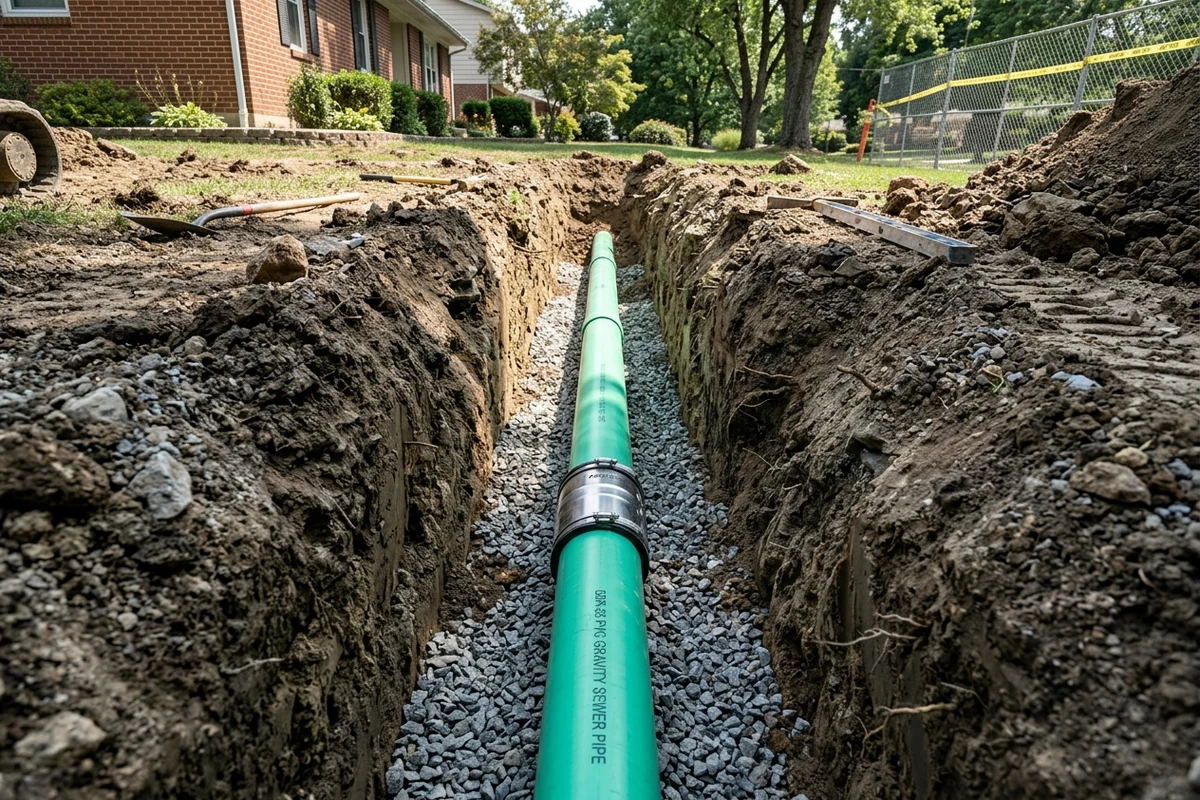
Full or partial replacement when a lateral is collapsed, bellied, Orangeburg or failing in several places.
Learn more about sewer line replacement
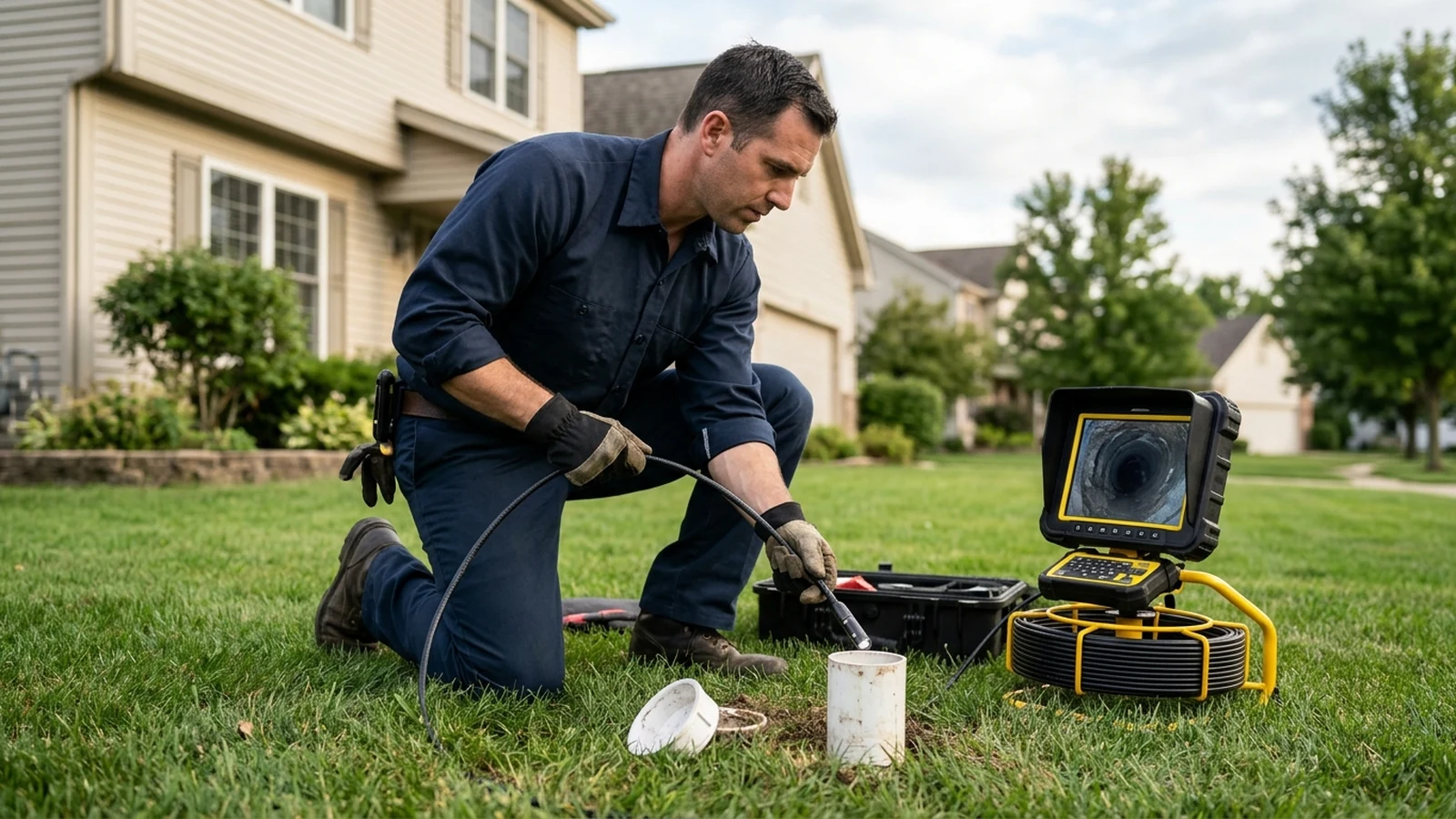
Backups, tree roots, cracked or collapsed pipe, sewer odors — one call connects you with an independent local sewer contractor who can find the problem and fix it, from a single spot repair to a full trenchless replacement.
Serving homeowners, landlords and commercial properties in 172 Connecticut communities. We're a referral service — calls connect you with independent local providers.

Find the exact cause and location before anyone digs.
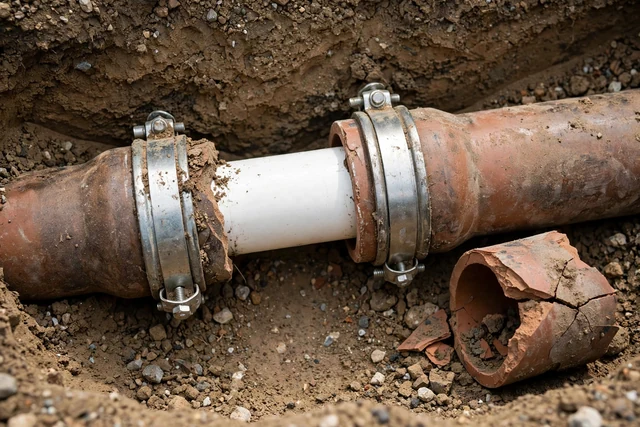
Spot repairs, lining, bursting or a new line — matched to the pipe.
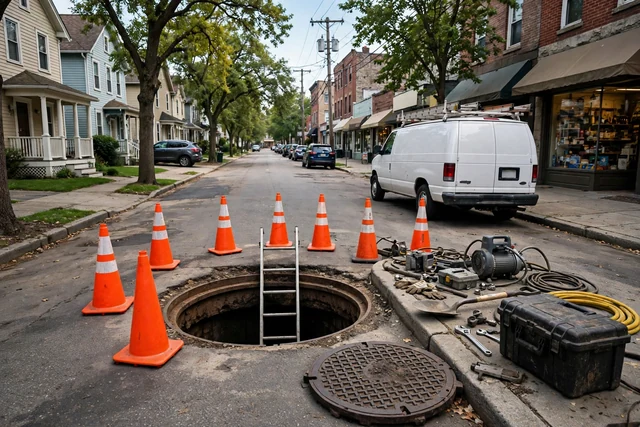
Single-family homes, multi-family buildings and businesses.
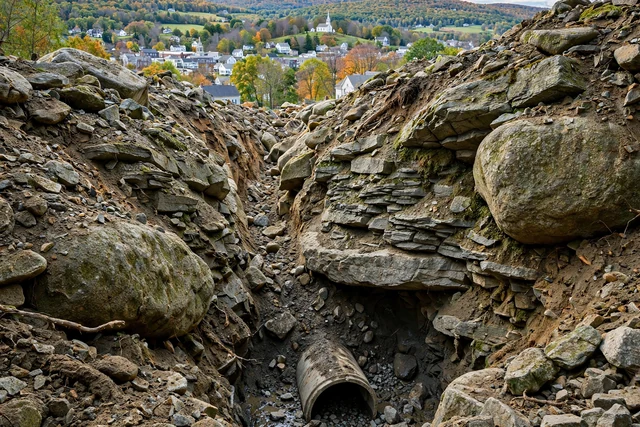
Cities, suburbs, shoreline and hill towns statewide.
Sewer line repair fixes damage in the pipe that carries wastewater from your building to the public sewer main or septic tank — called the sewer lateral or building sewer. Repairs range from replacing a single cracked section to lining or replacing the whole line.
Most laterals in Connecticut are owned and maintained by the property owner, at least to the property line. When they fail — usually from tree roots, cracked or separated joints, corroded cast iron, deformed Orangeburg pipe or a sag that holds waste — the symptoms show up inside: slow drains everywhere, gurgling toilets, sewage at the floor drain, odors, or a soggy patch of lawn.
The right repair depends on what's actually wrong. That's why good contractors start with a sewer camera inspection, then recommend a spot repair, trenchless lining or pipe bursting, or full sewer line replacement. Our job is to get you to a provider who does that work every day.
Sewer problems range from a single root-filled joint to a collapsed line. These are the services our network of independent local contractors provides across the state.
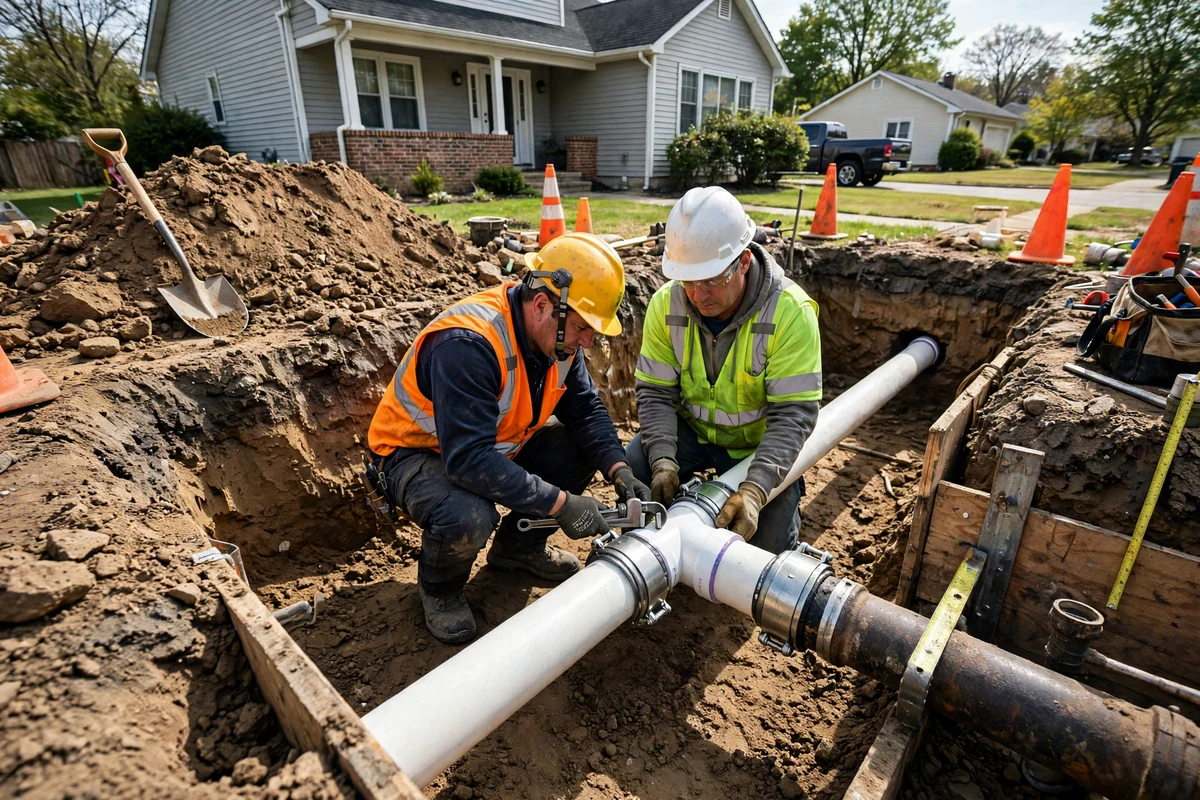
Full or partial replacement when a lateral is collapsed, bellied, Orangeburg or failing in several places.
Learn more about sewer line replacement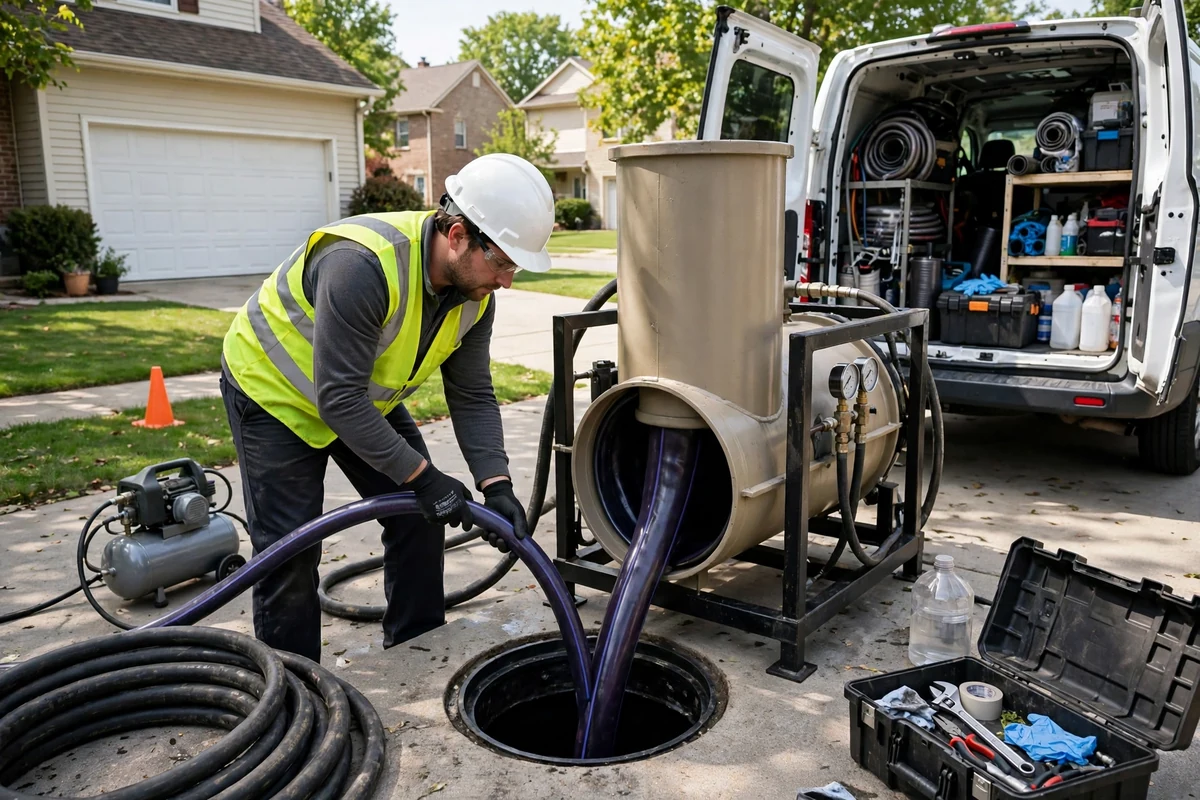
Pipe lining and pipe bursting that can rebuild a sewer line through small access points instead of a long trench.
Learn more about trenchless sewer repair
A video scope of your sewer line that shows cracks, roots, sags and breaks — and exactly where they are.
Learn more about sewer camera inspection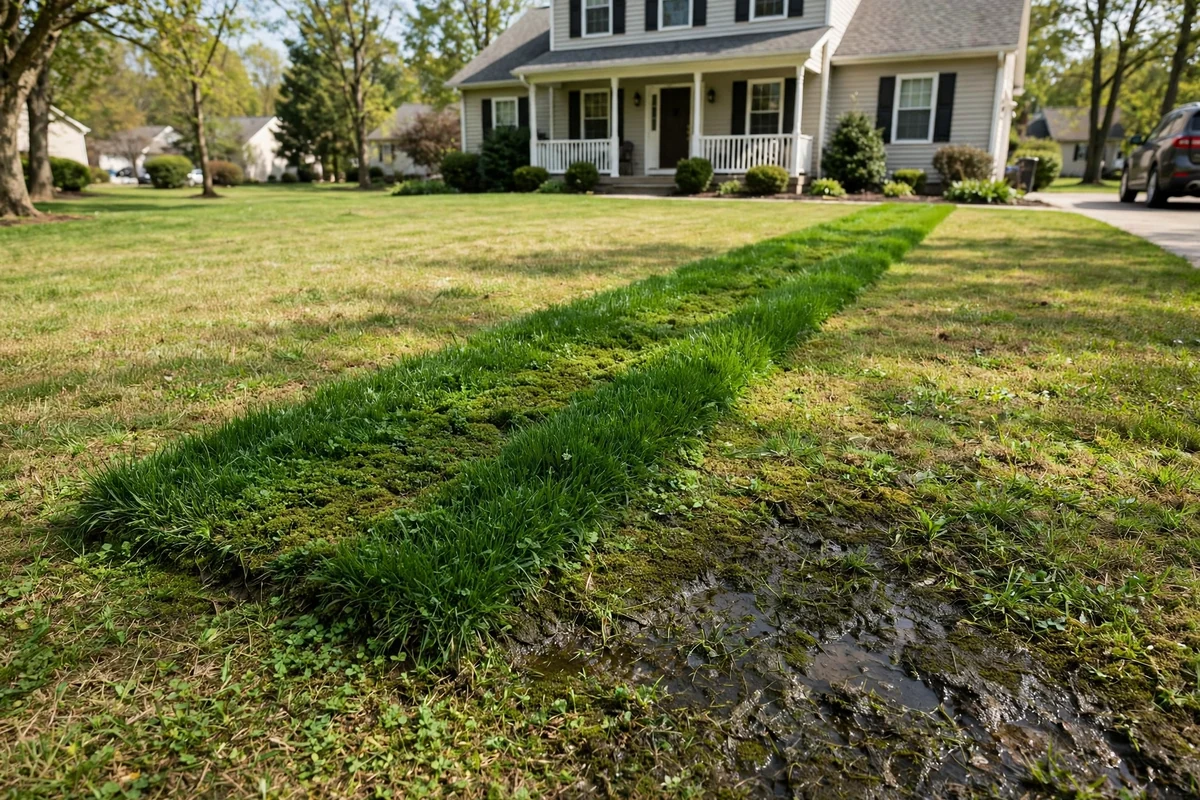
Camera, smoke and dye testing to find where a sewer line is leaking underground or inside the walls.
Learn more about sewer line leak detection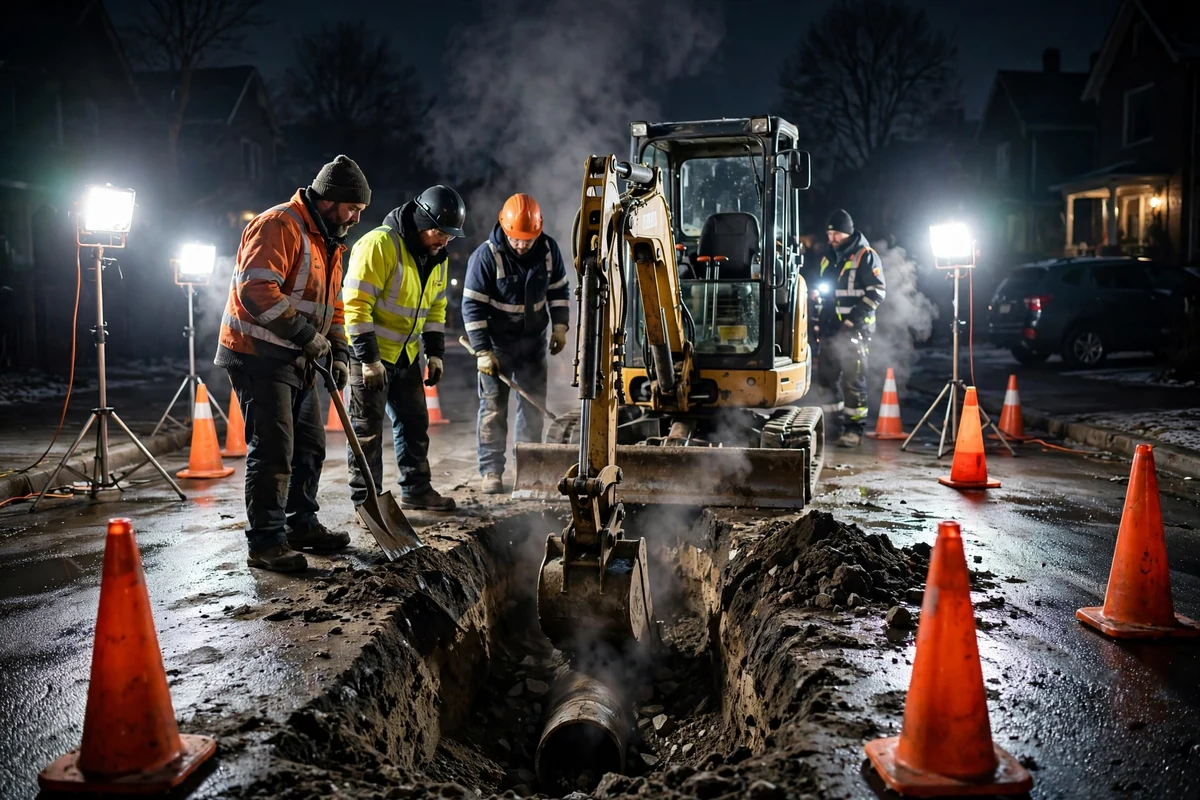
Urgent help for sewage backing up into the house, a collapsed line or a sewer failure that can't wait.
Learn more about emergency sewer line repair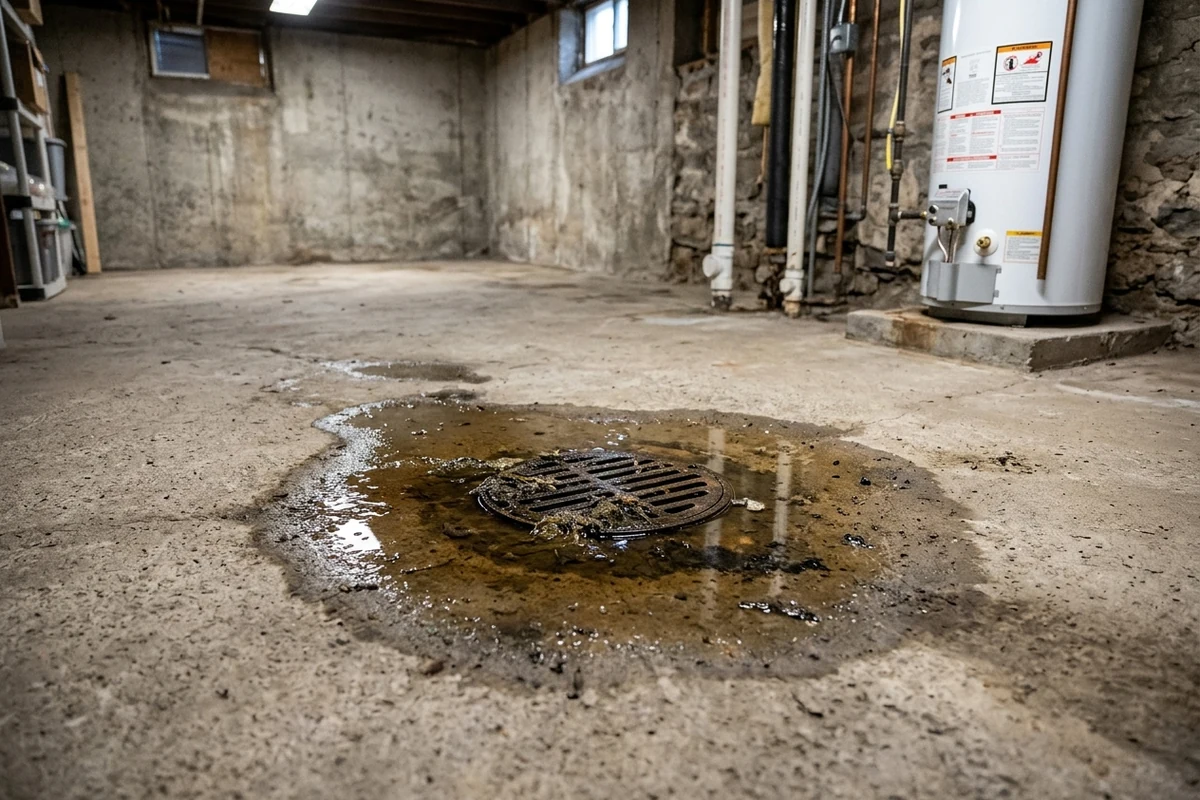
Figure out whether repeated backups come from a branch drain, your main sewer line or the town main.
Learn more about sewer backup diagnosis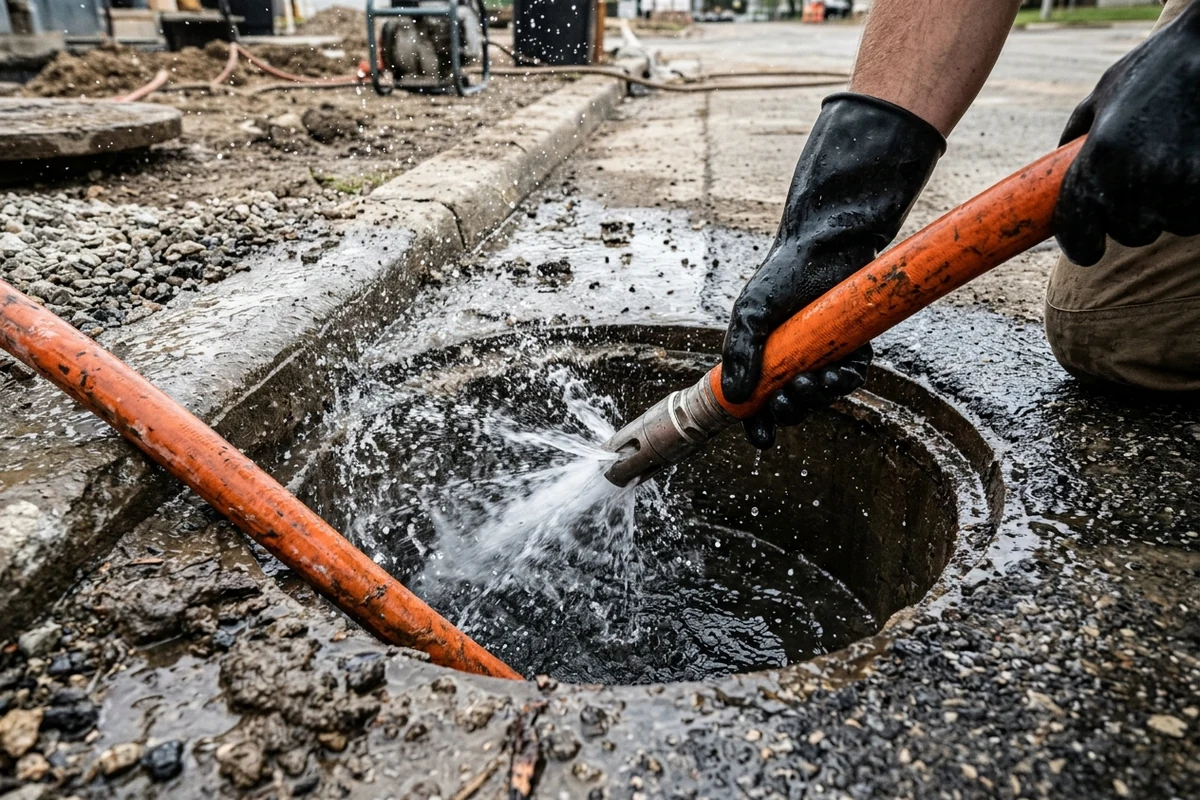
Hydro-jetting, cabling and root cutting to clear blockages, grease and roots from your main sewer line.
Learn more about sewer line cleaningThat's normal — most people don't know until someone looks inside the pipe. Call (855) 554-1144, describe what's happening, and the contractor will recommend the right first step, usually a cleaning and camera inspection.
Sewer line damage usually develops gradually. If you notice any of these, it's time to have your line inspected before a small defect turns into a backup:
Each sign is explained in our guide to the warning signs of a broken sewer line. If sewage is backing up right now, see emergency sewer line repair.
Not every plumber handles main sewer lines, and the ones who do aren't always easy to find during a backup. We focus on sewer line work and connect you directly with independent local providers who handle inspection, repair, lining and replacement.
Tip: ask any provider for their Connecticut plumbing license number. Licenses can be verified through the state Department of Consumer Protection's online license lookup.

The answer depends on what the camera finds — not on a sales pitch.
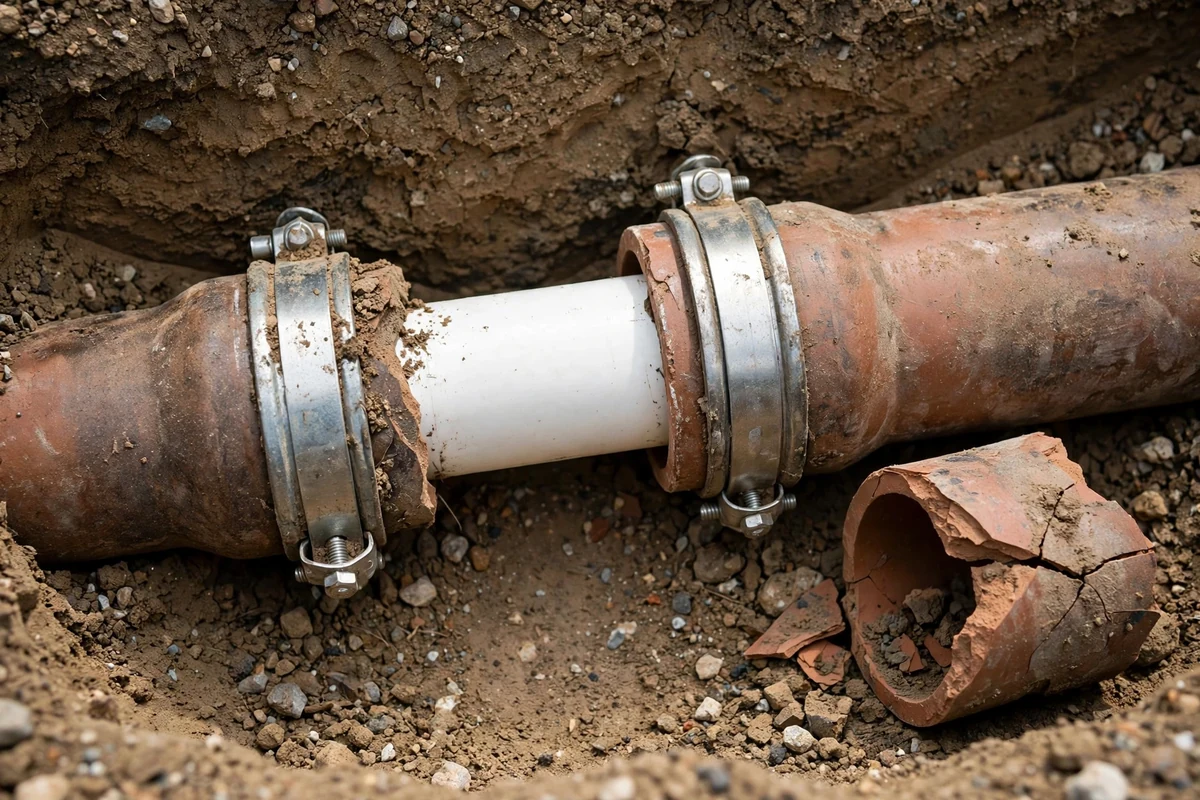
Usually the right call when damage is localized — one cracked section, an offset joint, a single root entry — and the rest of the pipe is sound. A spot repair or a short liner fixes the defect without replacing everything.
Usually recommended when damage is widespread: Orangeburg pipe, many failing joints, long sags, a collapse, or a history of repeat repairs. Open-trench or pipe bursting installs a new line.
The right solution depends on inspection findings, pipe condition, access, local requirements and property-specific factors. Read the full repair vs. replacement guide.
Here's how the main options stack up. Your contractor should explain which ones fit your line and why.
| Method | What it fixes | Digging | Not suitable for |
|---|---|---|---|
| Spot (point) repair | One cracked section, broken joint or root entry | One targeted excavation | Damage along much of the line |
| Cured-in-place lining | Cracks, leaking joints, roots, corrosion | Little or none | Sags, collapses, severe offsets |
| Pipe bursting | Deteriorated clay, cast iron, Orangeburg | Entry and exit pits | Lines beside shallow utilities, sharp bends |
| Open-trench replacement | Anything, including sags and collapses | Full trench | Lines under structures you can't disturb |
| Cleaning / hydro-jetting | Grease, scale, roots (temporarily) | None | Structural damage — it's maintenance, not repair |
Learn more about trenchless sewer repair, sewer line replacement and sewer line cleaning.
Old housing, big trees, rocky ground and coastal groundwater make Connecticut sewer lines work hard.

Tree-lined streets in towns like West Hartford, Hamden and Fairfield mean roots find every open joint in older clay laterals. How to deal with roots.
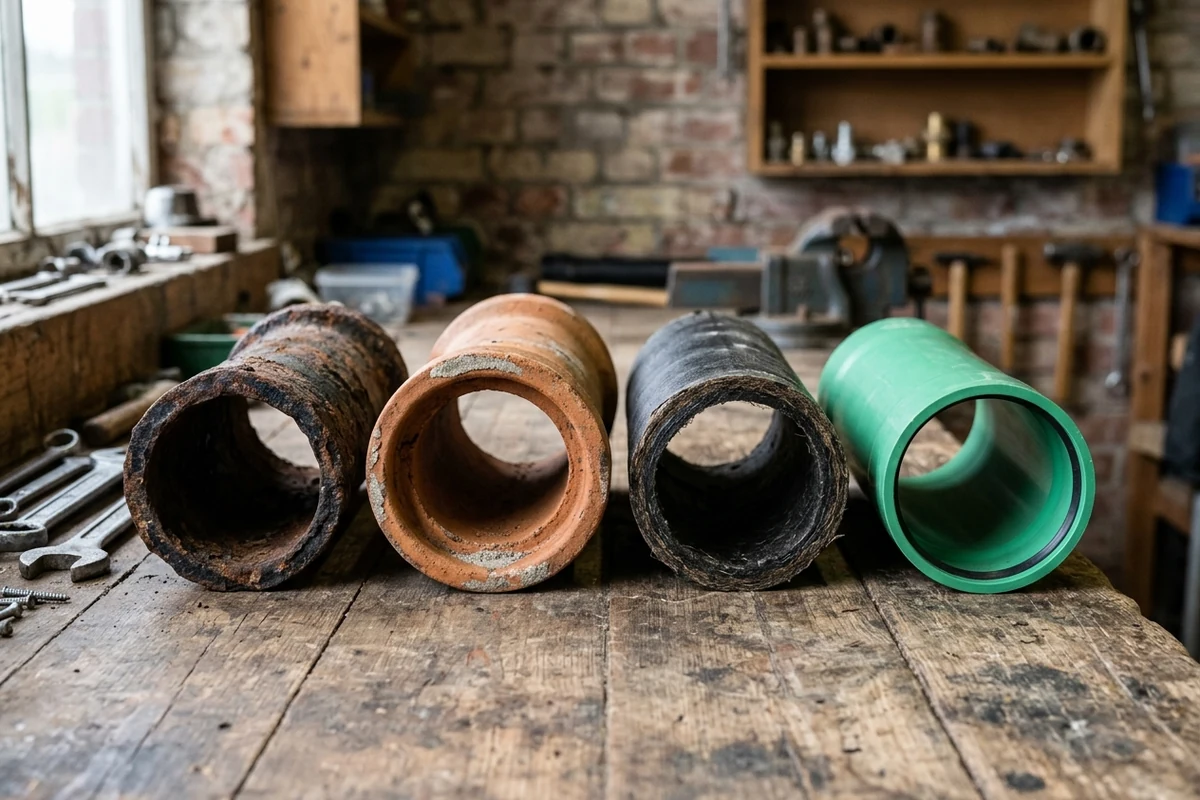
Clay, cast iron and post-war Orangeburg are reaching the end of their service life under thousands of Connecticut homes. What's under your house?
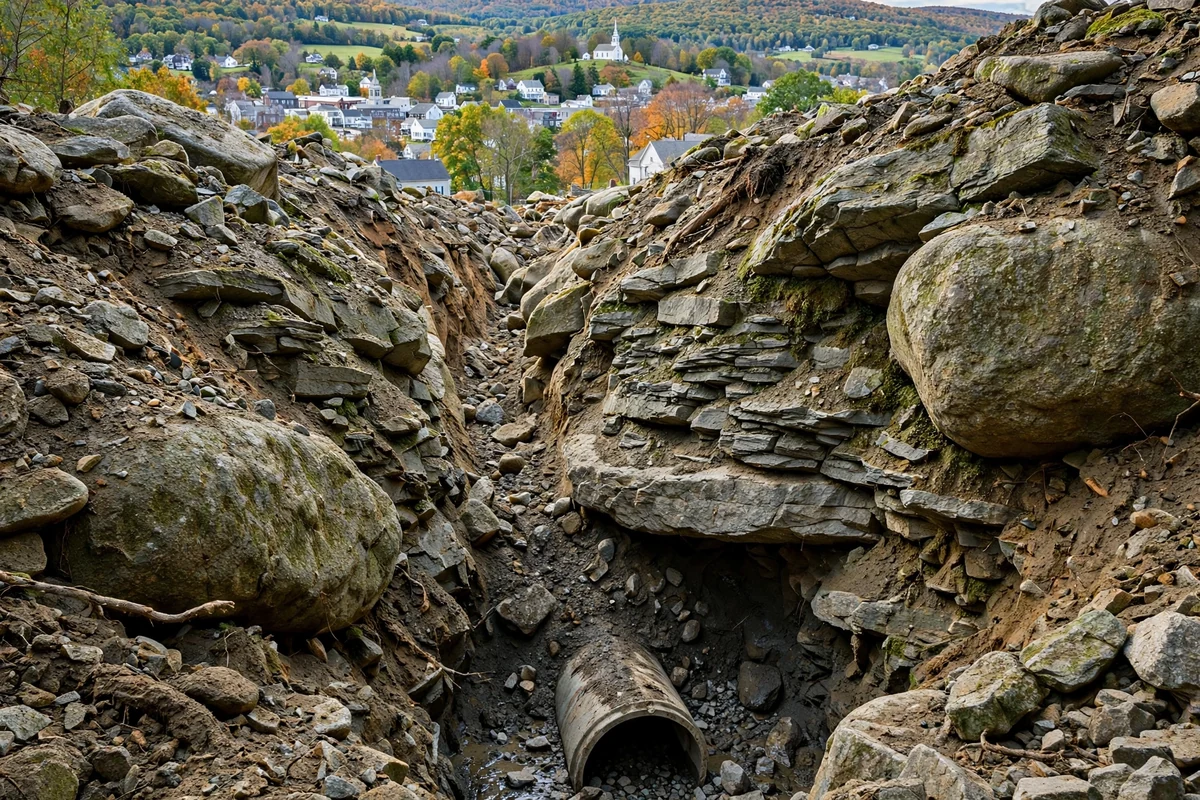
Glacial boulders and shallow bedrock in hill towns stress pipes and make excavation slow — a big reason to pinpoint problems first.
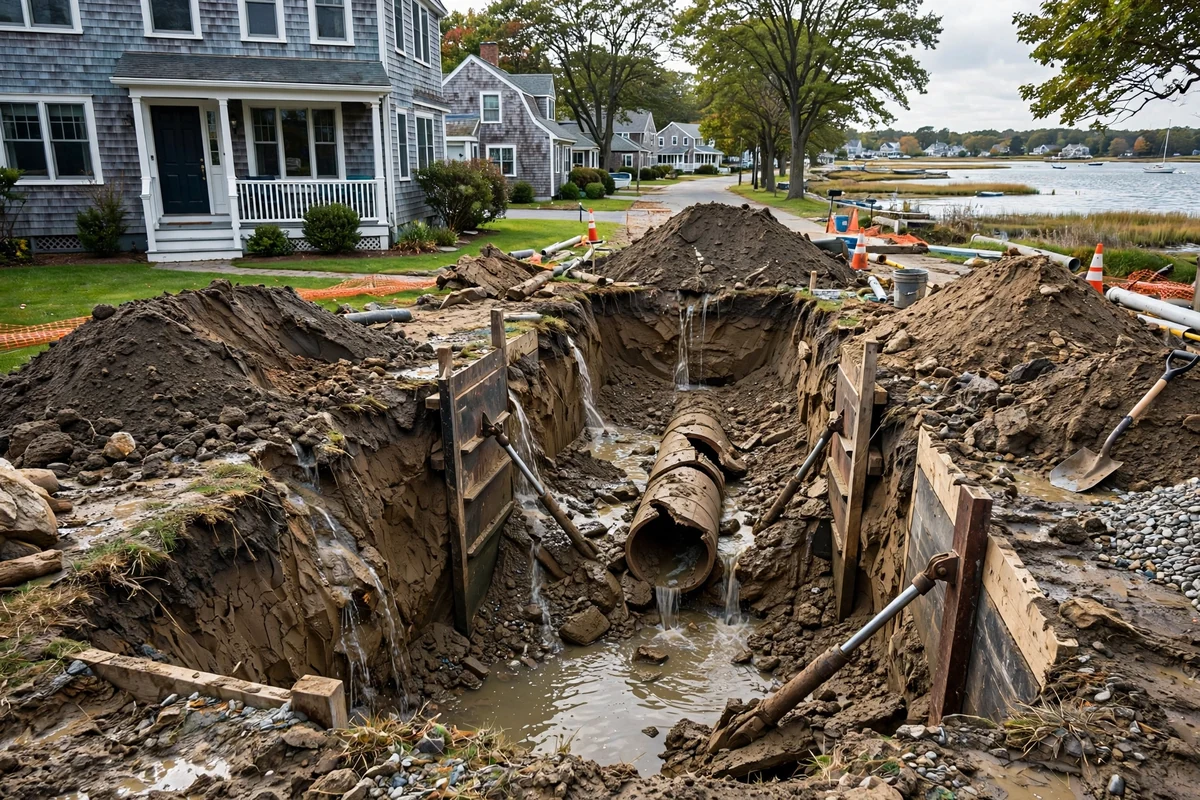
A high water table along Long Island Sound and the major rivers lets groundwater into cracked pipe and complicates open trenches.
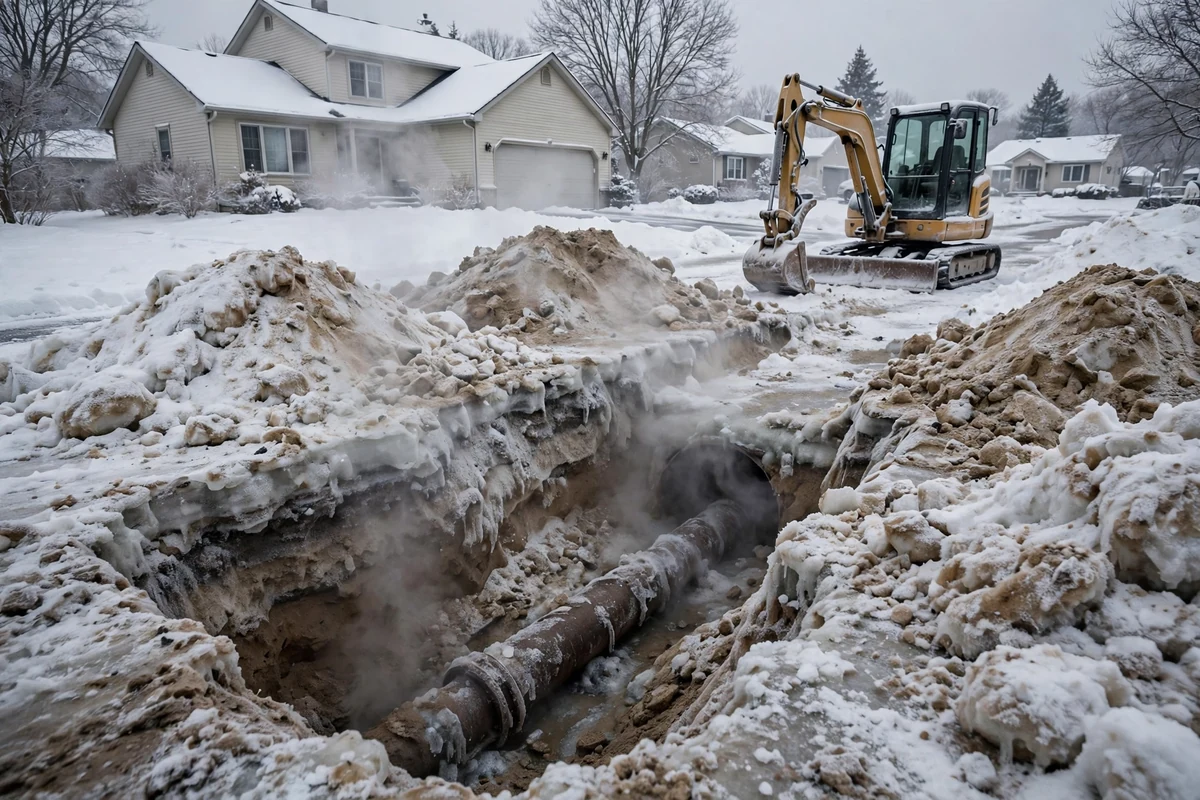
Seasonal frost moves soil, which can shift older joints over the years, and frozen ground makes winter excavation harder.
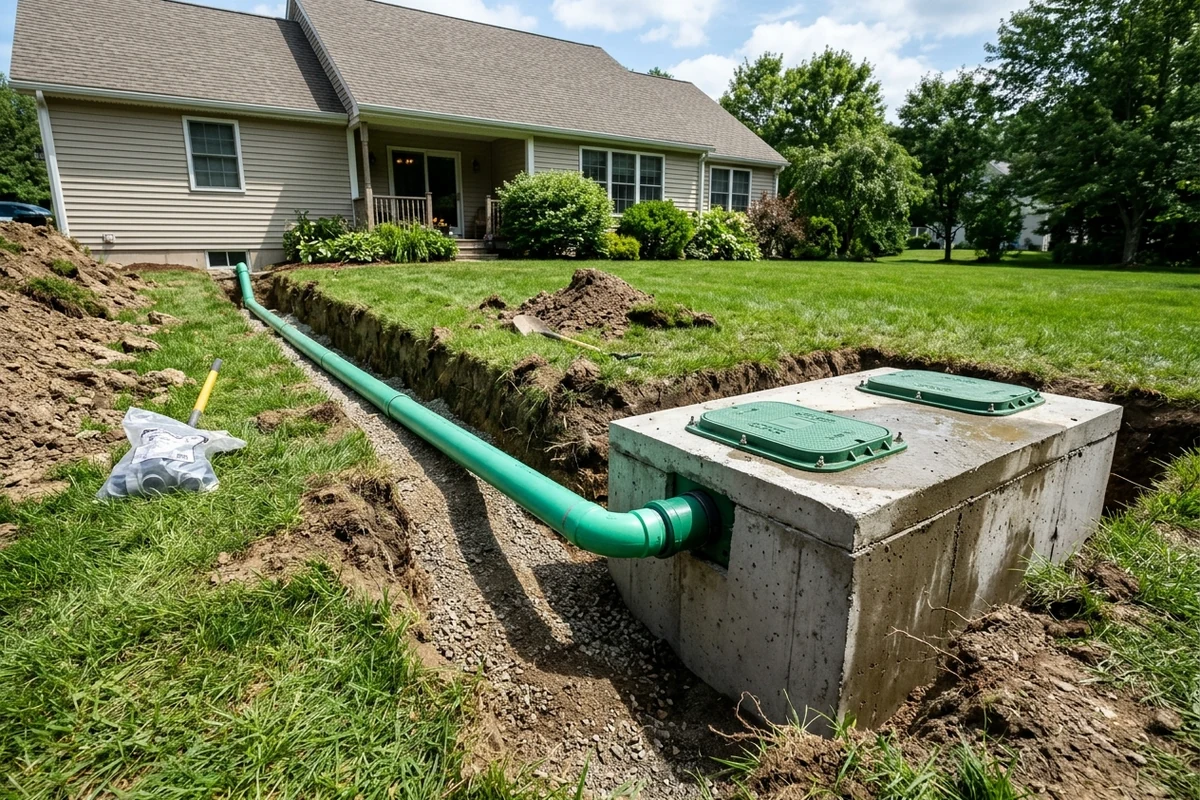
Many towns rely mostly on septic. The building sewer to the tank fails the same ways a city lateral does — and is often misdiagnosed.
We don't publish prices, because a sewer repair price without an inspection is a guess. These are the factors that move a Connecticut quote the most:
Ask for a written scope listing the method, materials, length, permits and restoration, and compare scopes rather than totals.
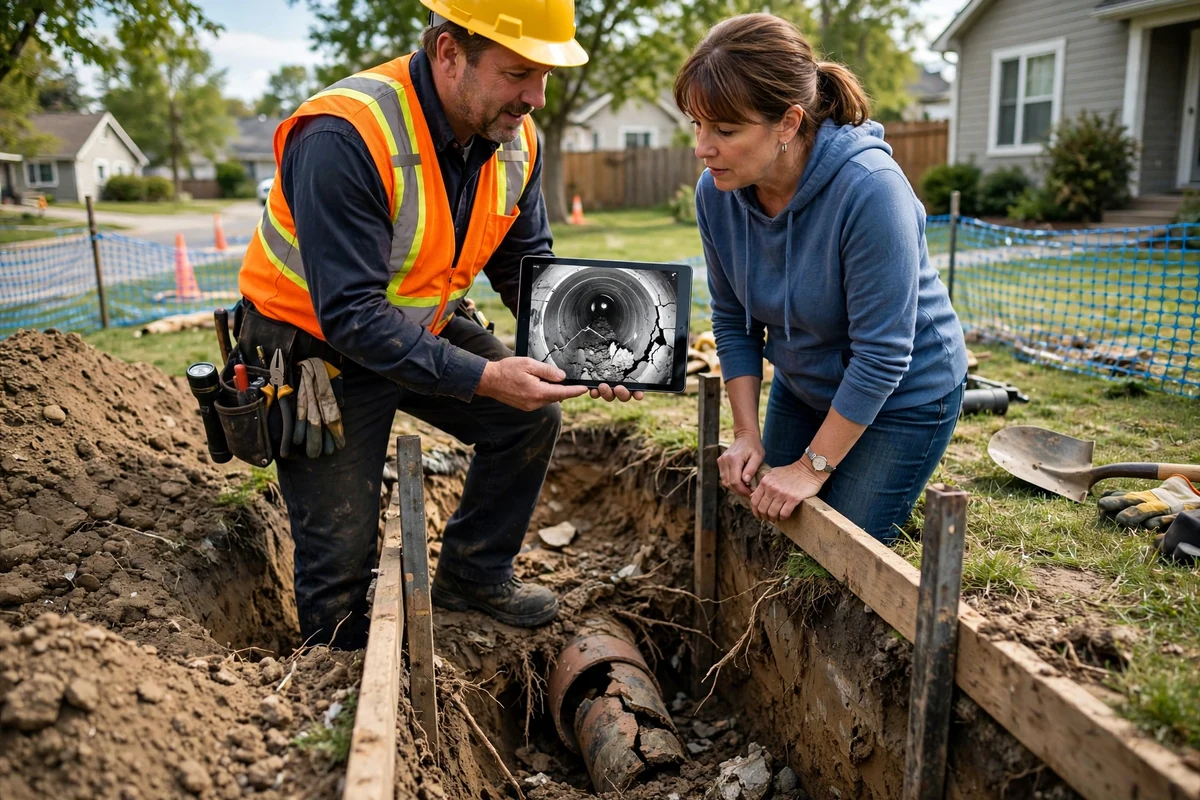
We connect property owners with local sewer contractors in 172 cities, towns and villages. Find your community below for local details, neighborhoods and services.
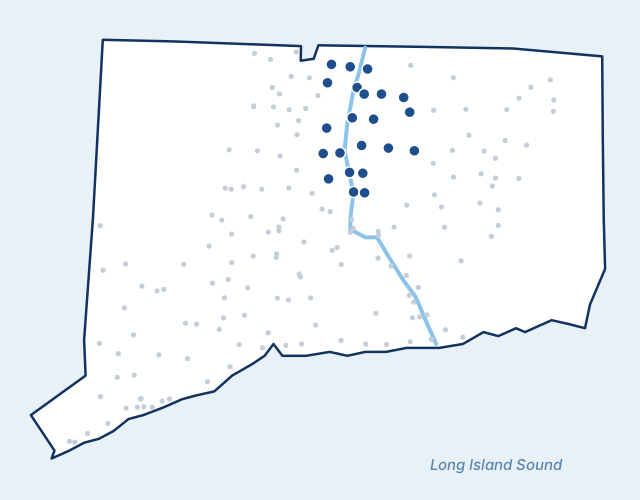
From early-1900s three-family homes in Hartford to post-war capes in Newington and Wethersfield, Greater Hartford's sewer laterals are aging — and most connect to MDC or town sewers. Our network covers Hartford, West Hartford, East Hartford, Wethersfield, Newington, Rocky Hill, Bloomfield, Windsor, Windsor Locks, South Windsor, East Windsor, Broad Brook, Manchester, Glastonbury, South Glastonbury, Bolton, Vernon Rockville, Ellington, Enfield, Suffield, West Suffield and East Granby.
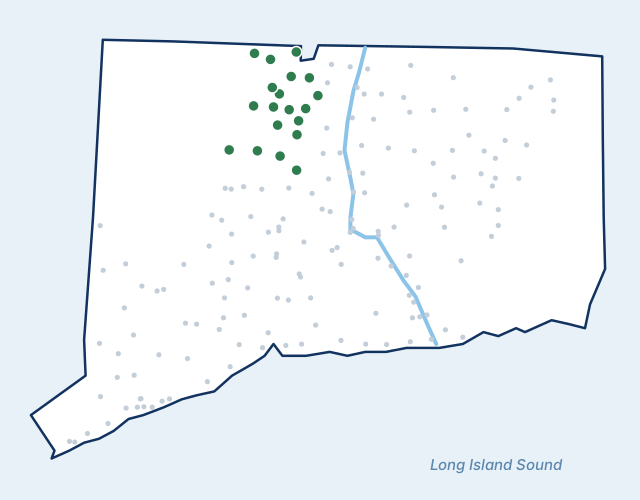
Historic mill villages along the Farmington River meet wooded hill towns where septic is the norm and ledge is rarely far below the lawn. Our network covers Granby, North Granby, West Granby, Simsbury, Weatogue, West Simsbury, Tariffville, Avon, Canton, Canton Center, North Canton, Farmington, Unionville, Burlington, Barkhamsted, Pine Meadow, New Hartford, Harwinton, East Hartland and West Hartland.
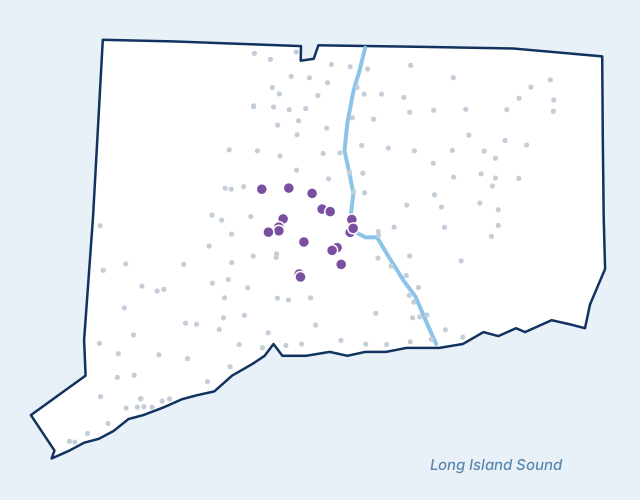
Dense neighborhoods in New Britain, Bristol and Meriden sit beside fast-growing suburbs, mixing century-old laterals with mid-century subdivisions. Our network covers New Britain, Berlin, East Berlin, Plainville, Southington, Plantsville, Milldale, Marion, Bristol, Meriden, Wallingford, Wallingford Center, Middletown, Rockfall, Middlefield, Durham, Cromwell and Portland.
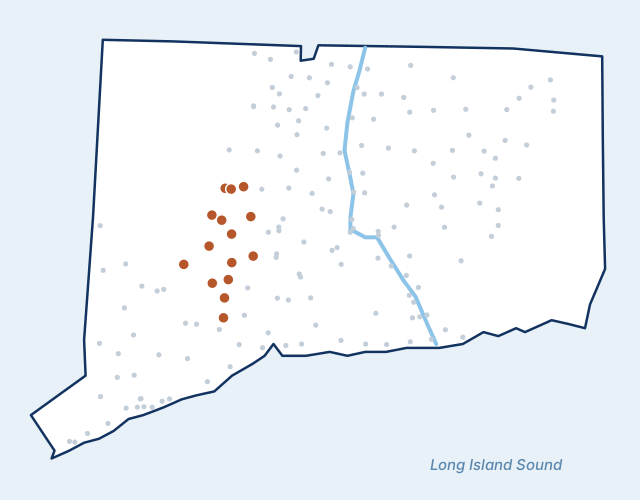
The Brass City and the river towns around it, where steep streets, tight lots and century-old pipe make sewer work a specialty. Our network covers Waterbury, Naugatuck, Beacon Falls, Ansonia, Seymour, Oxford, Prospect, Wolcott, Middlebury, Southbury, Watertown, Oakville, Thomaston, Plymouth and Terryville.
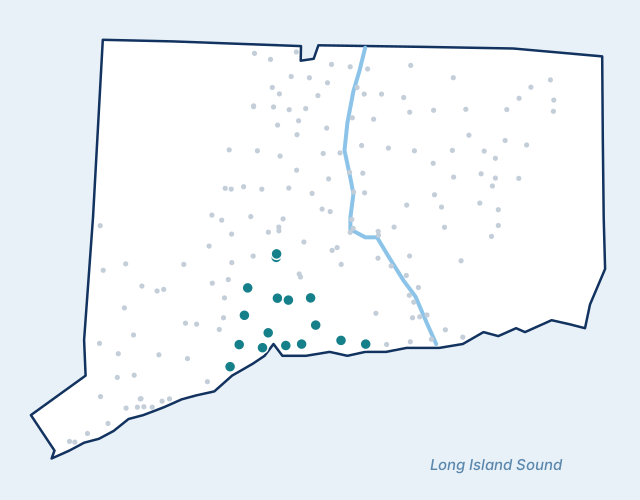
Victorian city blocks, tree-lined inner suburbs and shoreline neighborhoods with a high water table — plus several towns that rely mostly on septic. Our network covers New Haven, West Haven, East Haven, Hamden, North Haven, Branford, North Branford, Northford, Guilford, Madison, Orange, Woodbridge, Bethany, Milford, Cheshire and Cheshire Village.
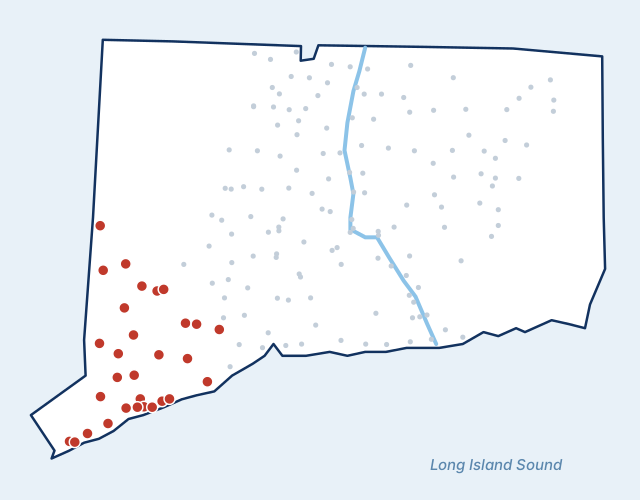
Shoreline villages, dense city neighborhoods in Stamford and Norwalk, and large wooded lots on septic in the northern towns. Our network covers Stamford, Norwalk, Darien, New Canaan, Wilton, Weston, Westport, Westport Village, Compo, Saugatuck, Greens Farms, Southport, Fairfield, Easton, Trumbull, Stratford, Monroe, East Village, Shelton, Redding, Georgetown, Ridgefield, Bethel, Newtown, Sandy Hook, Hawleyville, Brookfield, New Fairfield, Sherman, Cos Cob and Riverside.
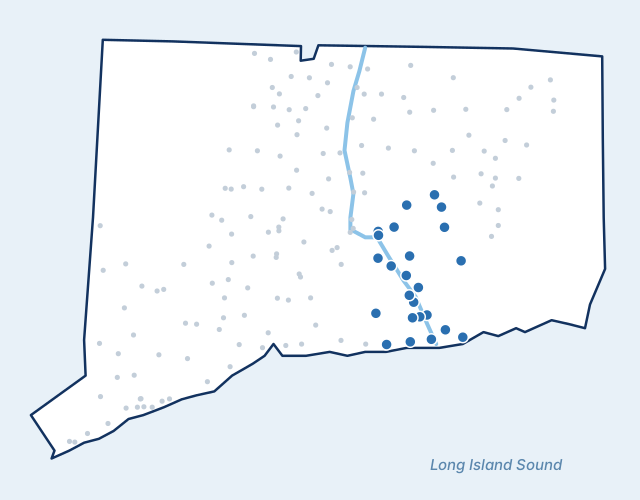
Connecticut River villages, shoreline beach communities on sandy soil and lake towns where most homes rely on septic. Our network covers Old Saybrook, Essex, Centerbrook, Ivoryton, Deep River, Chester, Haddam, Higganum, East Haddam, Moodus, Hadlyme, Old Lyme, South Lyme, Westbrook, Clinton, Killingworth, East Hampton, Cobalt, Middle Haddam, Marlborough, Hebron, Amston, Colchester and Salem.
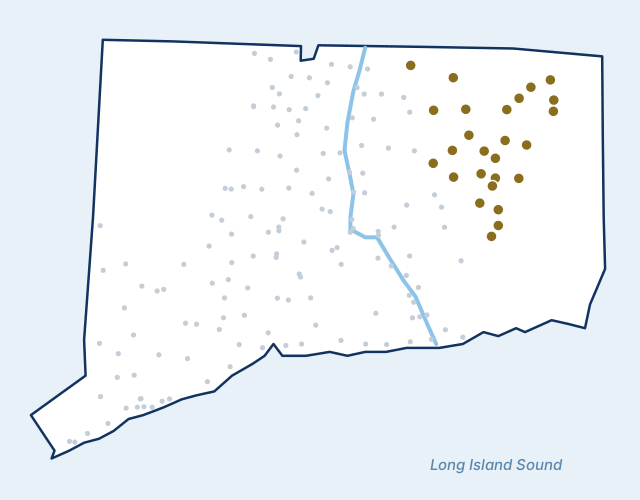
UConn country and the Quiet Corner — rural towns, historic villages and mill cities like Willimantic. Our network covers Tolland, Coventry, Andover, Columbia, Willington, Ashford, Eastford, Mansfield Center, Storrs Mansfield, Stafford Springs, Somers, Windham, Willimantic, North Windham, South Windham, Chaplin, Scotland, Hampton, Pomfret, Pomfret Center, Woodstock, Woodstock Valley, Lebanon, Bozrah, Gilman and North Franklin.
Straight answers to the questions Connecticut homeowners ask most — before and after they call.
How to tell a simple clog from a failing main line, and the order to tackle it in.
Read the guide: 9 Signs of a Broken Sewer Line — and What to Do NextWhy Connecticut's mature trees love old sewer laterals — and how to stop the cycle of root cutting.
Read the guide: Tree Roots in Your Sewer Line: Causes, Fixes and PreventionA practical framework for choosing between a spot repair, lining and a new line.
Read the guide: Sewer Line Repair vs. Replacement: How to DecideHow the two no-dig methods work, and what each one can and can't fix.
Read the guide: Pipe Lining vs. Pipe Bursting: Trenchless Sewer Repair ExplainedWhat happens during a sewer scope, and how to understand what you're looking at.
Read the guide: Sewer Camera Inspection: What to Expect and How to Read the VideoSafety first, then stop the water, document, and find the cause so it doesn't happen again.
Read the guide: Sewer Backup in the Basement? What to Do in the First HourWhere your responsibility usually ends, why it varies by town, and how to find out for sure.
Read the guide: Who Is Responsible for the Sewer Lateral in Connecticut?How your home's age hints at what's underground — and how each material typically fails.
Read the guide: Orangeburg, Clay and Cast-Iron Sewer Pipes: What's Under Your Connecticut Home?It depends on the problem and the property: the type and location of the defect, the pipe's length, depth and material, the repair method, access, ledge or groundwater, permits and surface restoration. A camera inspection and a written scope are the only reliable basis for a price, so we don't publish flat rates. Our repair vs. replacement guide explains what drives cost.
Several slow drains at once, water coming up the basement floor drain, gurgling toilets, sewer odors, a soggy or unusually green strip of lawn, and backups that return after cleaning. See our full list of signs of a broken sewer line.
Often. Cured-in-place lining and pipe bursting can rebuild or replace a line through small access points. They aren't suitable for every pipe — sags and collapses usually need excavation. Learn more about trenchless sewer repair.
Replacement usually makes sense for Orangeburg pipe, lines with damage along much of their length, long sags, collapses, or a history of repeat repairs. A single defect in otherwise sound pipe is usually a repair.
In most Connecticut towns the owner is responsible for the private lateral at least to the property line and often to the main. It varies by town and sewer authority — read who is responsible for the sewer lateral.
Most towns require a building or plumbing permit, and sewered properties often need sewer-authority approval. Work in the road needs a street opening permit. Licensed contractors typically handle this.
Policies vary. Many exclude wear and tear and sewer backup unless you've added an endorsement, and some insurers offer service-line coverage. Check your policy and call your insurer early.
Roots usually enter through existing cracks and joints rather than breaking sound pipe, but once inside they grow, widen openings and trap waste. See tree roots in sewer lines.
Yes. The building sewer between the house and the septic tank can crack, sag and fill with roots just like a lateral to a city sewer, and many of the towns we cover rely largely on septic.
No. We're a referral service that connects callers with independent local sewer contractors. You discuss pricing, scheduling and the scope of work directly with the provider. Read more about how our service works.
Tell us what's happening at your property and we'll connect you with an independent local sewer contractor who can diagnose it and explain your options.
(855) 554-1144